Natural fiber
Linen
Linen is a long natural fiber from the flax plant that cools exceptionally well, creases easily, and generally outlasts most other fabrics.
Published · Updated
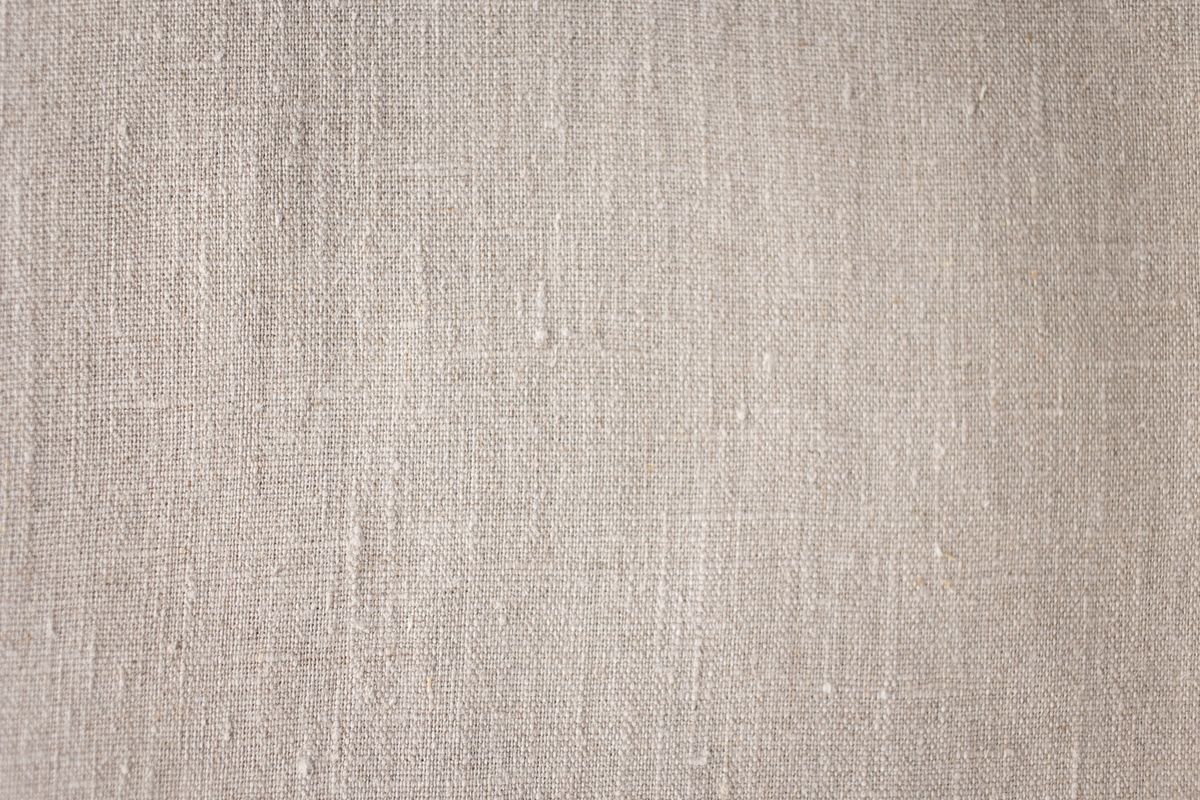
- Breathability
- High
- Moisture
- Absorbs fast and dries fast
- How it wears
- High abrasion resistance; pills very little, breaks at hard folds
- On the label
- “Linen look,” “linen feel,” and an unqualified “linen blend” are marketing phrases, not fiber content, and viscose or polyester is sometimes textured to imitate linen. Flax and linen mean the same fiber on the label, so read the fiber line rather than the product name.
Against skin
Linen is breathable and releases moisture quickly, so it doesn’t hold heat and dampness against your skin. New linen can feel a little scratchy while it’s still stiff, but it softens with washing.
Linen comes from flax, and from the stem of the plant rather than a seed or a fleece. Flax is what’s called a bast fiber: the usable strands run the full length of the stalk and are freed by retting, a controlled breakdown that loosens the woody parts before the fibers are combed and spun. Linen is one of the oldest textiles in continuous use.
Those long stem fibers explain nearly everything linen does, from how it feels in the heat to how long it lasts.
Why is linen so cooling?
Linen moves heat and moisture away from your body at the same time. It absorbs moisture readily and releases it quickly, so it takes on sweat and then dries. The open weaves linen is usually made into let plenty of air through, and the fiber conducts heat away from your skin, which is why linen feels cool the moment you put it on. In real heat, few fabrics do better.
The tradeoff is stiffness. Linen has very little elasticity, so wherever it folds, it creases sharply and immediately. New linen tends to stand away from the body, then softens steadily with washing and begins to drape. A linen shirt that looks freshly pressed at 9am probably won’t by 3pm, and that’s normal for the fiber. Many people come to enjoy the relaxed, lived-in look!
How it wears
Durability is linen’s strongest quality. The fibers are long, so there are few loose ends to work free, and linen pills very little compared with cotton or wool. Abrasion resistance is high, and linen stands up well to repeated washing. Linen shirts and sheets often last for many years.
The one weakness is folding. Because the fiber resists bending, repeated hard creases in the same spot (a sharp collar fold, or a tablecloth stored flat for years) can eventually break fibers along that line. The prevention is simple: store linen rolled or loosely folded. Wear testing is coming to verified garments in Lynen, though that coverage isn’t live yet.
Is linen hypoallergenic?
“Hypoallergenic” has no regulated definition on clothing, so it’s best to treat the word as marketing. What linen measurably offers is breathability, quick moisture release, and very little lint, so it doesn’t hold heat and dampness against your body. That combination is why linen keeps appearing in hot-weather clothing guidance.
When a new linen garment feels irritating, the usual cause is stiffness or a finish rather than the fiber, and both improve with washing. As with anything skin-related, this is general wellness information, not medical advice. If irritation continues, talk with your dermatologist.
Is “linen blend” actually linen?
Sometimes only partly, and sometimes not at all. Viscose and polyester can be textured and woven to imitate linen’s look, and phrases like “linen look,” “linen feel,” or an unqualified “linen blend” are marketing language, not fiber content. The good news is that the fiber content line has to state actual content in both the US and the EU, so read that line rather than the product name. Flax may be listed as either “linen” or “flax,” and they mean the same fiber.
Genuine blends do exist: linen with cotton (softer, cheaper, less crisp), linen with viscose (more drape, less durability), and linen with polyester (fewer wrinkles, less cooling). Each is a legitimate fabric, but blend labels are also where accuracy can slip. In the EU market-surveillance campaign published in June 2026, inspectors tested 132 garments across eight countries and found blend labels failed 64% of the time, compared with 15% for single natural fiber claims.
Care that extends it
Wash linen cool on a gentle cycle with some room in the drum, since linen creases hardest when it’s pressed against itself. Skip high dryer heat. Line drying, or a short tumble followed by hanging while the garment is still slightly damp, gives the softest result and the fewest set-in creases.
Iron it damp if you iron at all, and don’t worry about a little rumple. It comes with wearing one of the coolest natural fibers there is.
Common questions about linen
Is linen hypoallergenic?
“Hypoallergenic” has no regulated definition on clothing, so it’s best to treat the word carefully. What linen measurably offers is breathability, quick moisture release, and very little lint, which means it doesn’t hold heat and dampness against your skin. When a new linen garment feels irritating, the cause is usually stiffness or a finish rather than the fiber itself.
Why does linen wrinkle so much?
Linen has very little elasticity, so wherever it folds, it creases sharply and right away. That’s the fiber behaving normally, not a flaw in your garment. Washed linen softens and drapes a little more with every cycle.
Does linen shrink?
It can shrink some, mostly during the first warm wash. Washing cool and line drying will generally keep a linen garment close to its original size.
Read next
This is general wellness information drawn from published research.