How Often Are Clothing Labels Wrong? Here’s What the Research Shows
Researchers have tested how well clothing labels match the actual fabric. Here’s what the studies found and what you can do about it.
Have you ever wondered whether the label inside your shirt is accurate? Researchers have wondered the same thing and put clothing label accuracy to the test.
The short answer: fiber labels sometimes don’t match the fabric they’re sewn into. But before that sends you eyeing your closet with suspicion, there’s some helpful context. Mislabeled clothing usually has ordinary explanations, and a little awareness goes a long way when you shop.
How Often Are Clothing Labels Inaccurate?
Two large studies have looked at exactly this question.
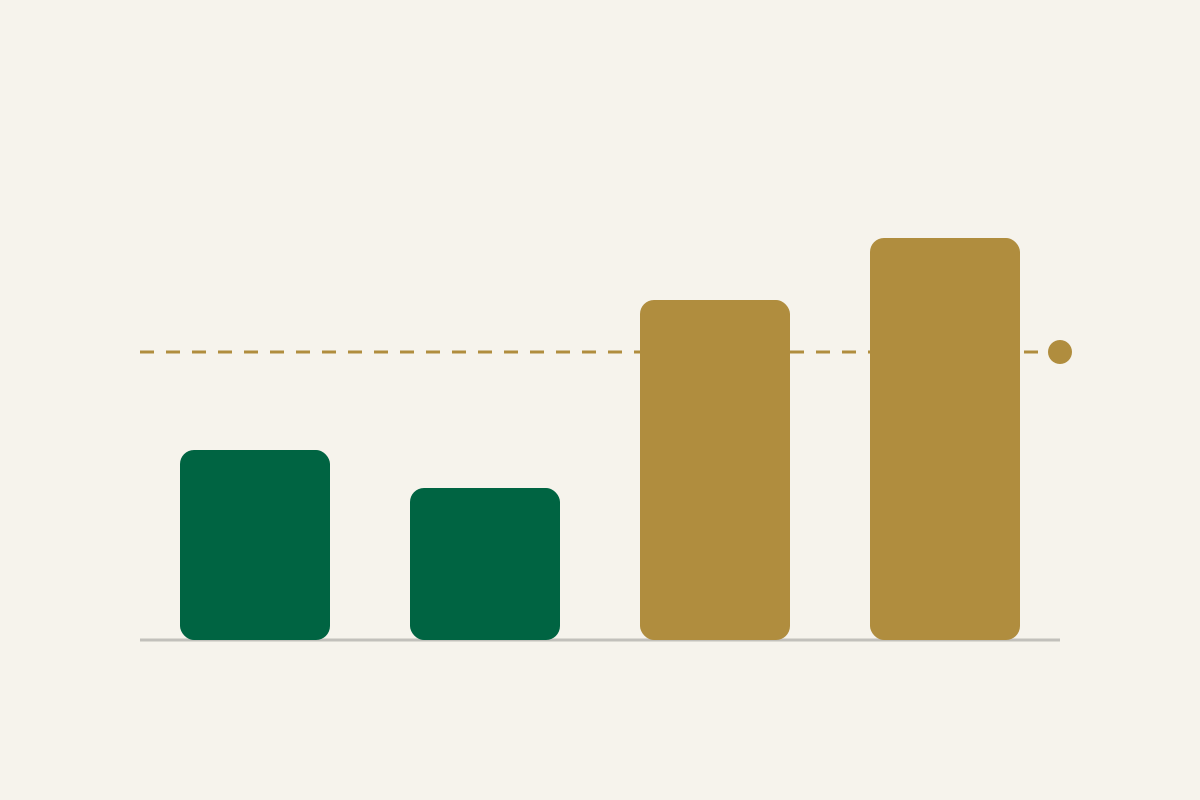
In a 2019 study commissioned by the Dutch government, researchers scanned more than 10,000 used garments and found that fiber labels were likely to mislead a shopper in 41% of cases.
Seven years later, a 2026 EU inspection campaign tested 132 garments across eight countries and found that 37% were mislabeled.
Different clothes and different testing methods point to a similar answer: labels sometimes mislead, and it happens more often than most of us would guess.
Why Is Mislabeled Clothing So Common?
Most mislabeling isn’t dramatic. It usually comes down to how clothing gets made.
Long supply chains. A single garment can involve yarn from one supplier, fabric from another, and assembly somewhere else. Small errors can accumulate, and the finished product is rarely retested.
Labels based on paperwork. Sometimes a label copies a specification sheet instead of a test on the finished fabric, so a mid-production yarn substitution may never make it onto the tag.
Blends are harder to get right. A label listing two or three fibers has more numbers that can drift, and in the 2019 Dutch study, cotton-rich blends often listed more cotton than they contained.
Enforcement is limited. Fiber content labels are legally required in both the US and the EU, but checks like the 2026 EU inspection are occasional spot checks rather than routine testing.
Does a Mislabeled Garment Mean Poor Quality?
Not necessarily! Label accuracy and garment quality are two separate things. A well-made jacket can carry an inaccurate label, and an accurate label can sit on a garment that wears out quickly.
Accuracy still matters, though, for a few practical reasons:
Price. Natural fibers like cotton, wool, and silk often cost more. If a label overstates them, you may be paying for material that isn’t in the fabric.
Comfort. Fiber content affects how a fabric breathes and manages moisture, so a garment with more synthetic content than stated may feel different than you expected.
Care. Washing a fabric as though it were something else can shorten its life.
Skin preferences. If you choose certain fibers because they feel better on your skin, an accurate label is the basis of that choice. For ongoing skin concerns, your dermatologist is always the best guide.
How Can Lynen Help You Check a Label?
Reading the label carefully is a great habit, but it only tells you what the manufacturer says is in the garment.
Lynen helps you go beyond the label by checking fiber composition against independent testing when verification is available. That way, you have more than the tag to go on.
Remember: none of this means you need to second-guess everything you own. A label is a starting point rather than a guarantee. Read the fiber line, keep your receipt, and shop with a little healthy curiosity.
Frequently Asked Questions
How often are clothing labels wrong?
Two large studies offer estimates. A 2019 Dutch government study of more than 10,000 used garments found fiber labels likely to mislead in 41% of cases, and a 2026 EU inspection found 37% of tested garments mislabeled.
Why are clothing labels sometimes inaccurate?
Labels are sometimes based on paperwork rather than tests of the finished fabric. Yarn substitutions, rounding, and copying errors along a long supply chain can all lead to labels that don’t match the garment.
Can you return clothing that doesn’t match its label?
Generally, yes. A composition error is usually grounds for a return under ordinary consumer protection rules in both the US and the EU, so keep your receipt and start with the retailer.
Keep reading
Why Blended Fabrics Are Mislabeled So Often
Blended fabrics miss their labels more often than single-fiber garments. Here’s why that happens and what it means when you shop.
Read →
How Accurate Are Baby Clothing Labels?
A 2026 EU inspection found that baby clothing labels sometimes mislead. Here’s what the testing showed and how to shop with more confidence.
Read →
How Fabric Testing Works: Inside a Textile Lab
Ever wondered how a lab knows what your clothes are really made of? Here’s a friendly look at how fabric testing actually works.
Read →