Semi-synthetic fiber
Lyocell
Lyocell is a regenerated cellulose fiber made in a closed-loop process, stronger than viscose when wet and especially good at handling moisture.
Published · Updated
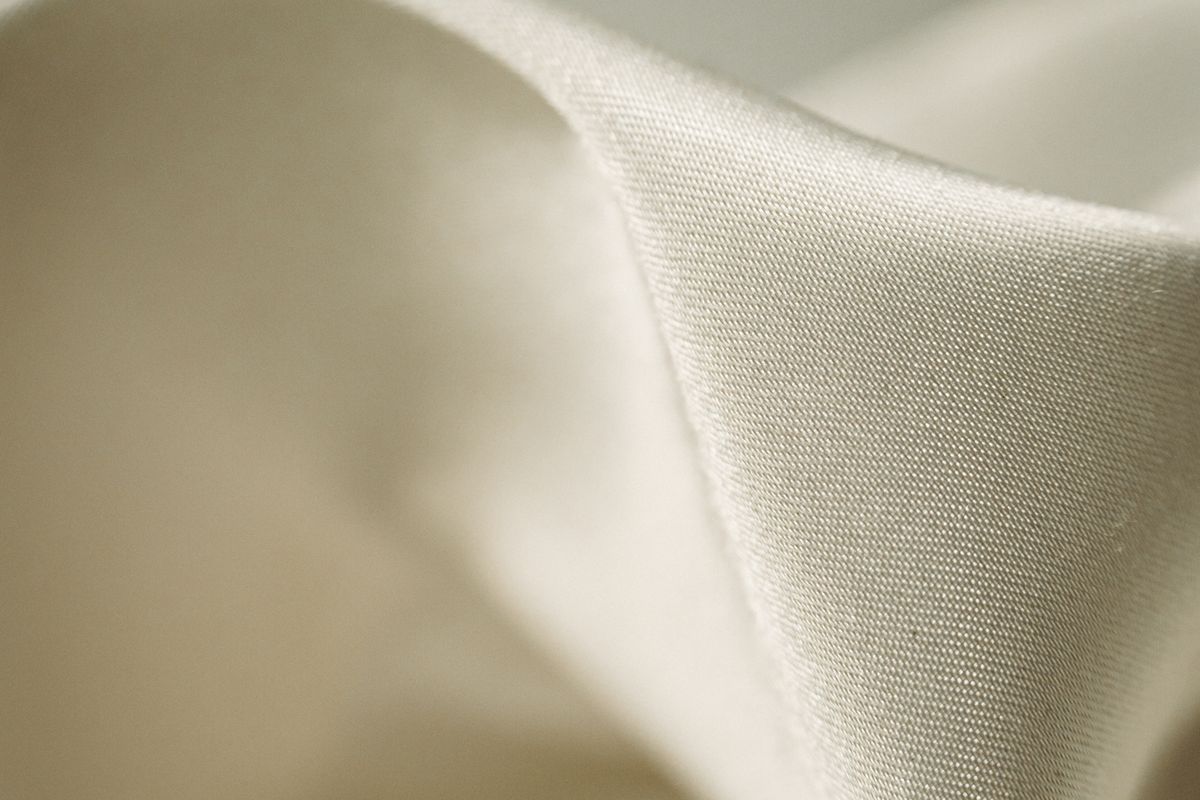
- Breathability
- Moderate
- Moisture
- Absorbs moisture readily and releases it steadily, making it one of the best moisture handlers among common fibers
- How it wears
- Strong both wet and dry, with low pilling in flat weaves, though rough washing can raise a fine fuzz on the surface
- On the label
- Lyocell sometimes appears under trademarked fiber-brand names, but it will still say lyocell on the fiber line. It belongs to the same regenerated cellulose family as viscose and modal, just made by a different process.
Against skin
Lyocell has a smooth surface and absorbs moisture well, so it can help keep heat and dampness from sitting against your skin. That’s a big part of why it shows up so often in sheets and base layers.
Lyocell is the youngest of the regenerated cellulose fibers, and in many ways it’s the easiest one to live with. Lyocell fabric does most of what viscose does, with fewer of viscose’s weaknesses, and the difference comes down to the process that makes it.
Here’s how lyocell behaves, how it wears, and what to look for on the label.
Is Lyocell the Same as Viscose and Modal?
All three fibers start as plant cellulose that’s dissolved and re-spun into filament. What separates them is the process.
Viscose uses the oldest chemistry and pays for it with weakness when wet. Modal improves on that. Lyocell is made in a closed-loop system that dissolves cellulose in a recoverable solvent and recycles most of it from one production run to the next. The fiber that comes out is strong both wet and dry, smooth, and unusually uniform.
On labels, lyocell may also appear under trademarked fiber-brand names. The fiber line will still say lyocell, and that’s the word to look for.
How Does Lyocell Behave?
Moisture handling is lyocell’s standout skill. It absorbs moisture readily and releases it steadily, which can help the fabric feel dry longer than cotton in damp conditions. That’s a big reason it keeps showing up in sheets, base layers, and summer clothing.
Lyocell also drapes with a pleasant weight, the way viscose does, takes dye deeply, and builds very little static. In your hand, it feels smooth and cool rather than fluffy.
How Does Lyocell Hold Up?
Strength is lyocell’s other advantage. It keeps most of its strength when wet, so the shrinking, stretching, and distortion that viscose is known for in the washing machine mostly don’t happen. It also pills very little in flat weaves.
The one quirk worth knowing about is called fibrillation: rough, hot, or prolonged wet agitation can raise a fine fuzz on the fabric’s surface. Mills sometimes use controlled fibrillation on purpose to create a soft, peach-skin finish. At home, the same effect can show up uninvited if the fabric is washed harshly.
How Does Lyocell Feel Against Skin?
Lyocell’s smooth surface creates very little friction, and its strong moisture uptake helps keep heat and dampness from sitting against your body. Those are fabric properties, not promises about how any particular person will feel.
As with every fiber, the dyes and finishes applied during manufacturing don’t appear on the care label. This page offers general fabric information, not medical advice, so if certain garments regularly bother your skin, talk with your dermatologist.
What Should You Check on the Label?
The fiber name. Lyocell is lyocell, whatever brand name travels alongside it. The fiber line is the part of the label that’s regulated.
The blend. Lyocell appears with cotton in denim, with polyester in less expensive mixes that can trade away some of its moisture handling, and on its own in sheets.
Remember that the percentages are the brand’s claim. Labels can sometimes mislead. In the EU’s inspection campaign published in June 2026, blends of natural and man-made fibers failed their label checks 64% of the time.
A certificate you can verify. OEKO-TEX® Standard 100 offers a free Label Check where you can enter a certificate number and see whether it checks out.
Blend claims can be the least reliable line on a tag, and that’s where Lynen can help. We commission independent accredited laboratories to test fiber content, so you can see how a garment’s label compares with what’s actually in the fabric.
How Should You Care for Lyocell?
Wash cool on a gentle cycle and avoid rough agitation, which is what raises surface fuzz. Line dry or tumble on low, and iron on low if you need to.
Lyocell is more forgiving than viscose, but the gentle-cycle habit is still what keeps its surface smooth for years. Give it that little bit of care, and it can stay one of the most comfortable fabrics you own!
Common questions about lyocell
Is lyocell the same as viscose?
They’re relatives, not the same fiber. Both are regenerated cellulose, but lyocell is spun in a closed-loop solvent system and comes out stronger, especially when wet, with a smoother surface than viscose.
Is lyocell good for hot sleepers?
It handles moisture unusually well, absorbing readily and releasing it steadily, so it generally doesn’t hold damp heat against your skin the way a synthetic can. That’s a fabric property, though, not a promise about anyone’s sleep.
Why does lyocell cost more than viscose?
The closed-loop process is more expensive to run, and the fiber it produces is stronger and more uniform. You’re paying for the process and the durability rather than a different raw material.
Read next
This is general wellness information drawn from published research.