Synthetic fiber
Acrylic
Acrylic is a synthetic fiber made to imitate wool, and while it offers real warmth for very little weight, it pills faster than almost anything else in your closet.
Published · Updated
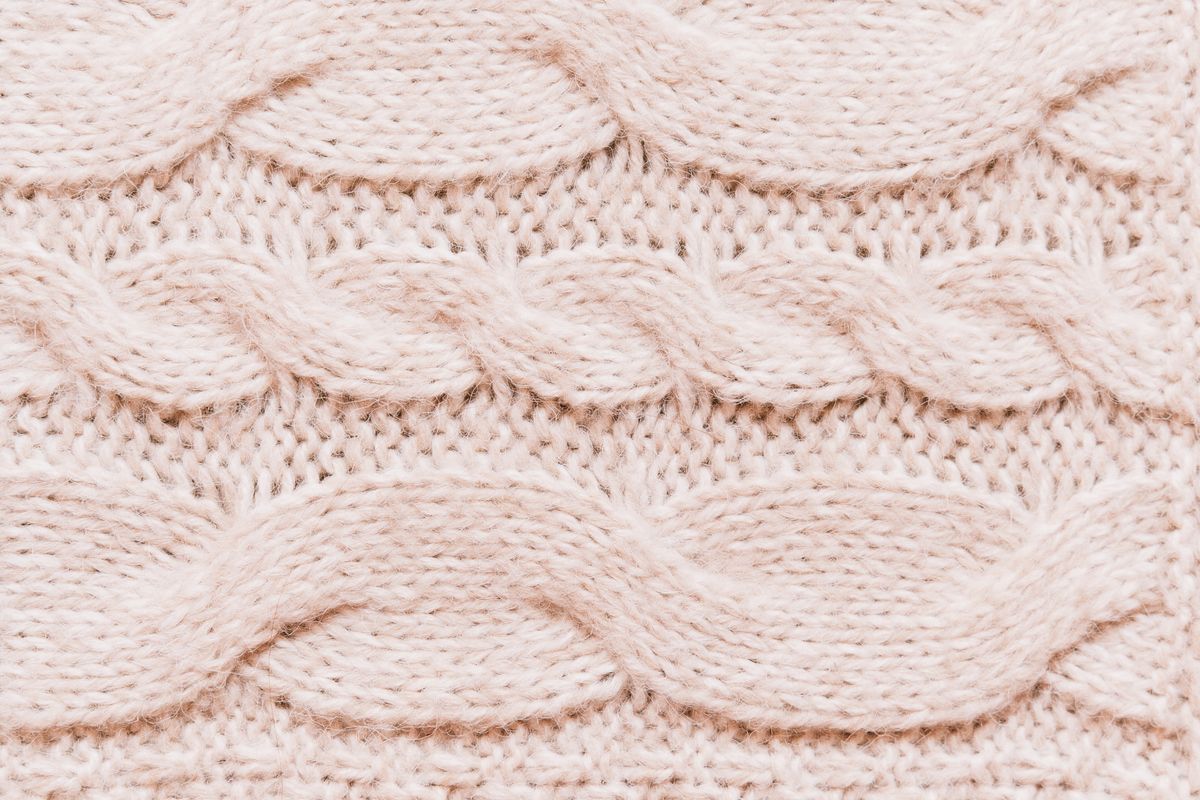
- Breathability
- Low
- Moisture
- Acrylic absorbs essentially no moisture and dries slowly in bulky knits, so it can feel warm and damp at the same time.
- How it wears
- Acrylic pills faster and more heavily than the other common fibers, though it keeps its color well in sunlight.
- On the label
- Acrylic often stands in for wool in soft knits and scarves. “Wool-feel” and “cashmere-touch” wording isn’t a fiber claim, so read the percentages instead.
Against skin
Acrylic insulates well and releases moisture slowly, so it can hold warmth and dampness against your skin at the same time. The loose fiber ends in a spun knit can also make surface friction more noticeable.
Acrylic exists for a simple reason: wool is expensive. Acrylic imitates wool at a fraction of the price, and it does a fair job of the warm, lightweight part. The imitation falls short in one very visible way, though, and it’s worth understanding before you buy your next sweater.
Is Acrylic the Same as Wool?
No. Acrylic is a synthetic fiber spun to imitate wool’s warmth and loft. Its technical name is polyacrylonitrile, a synthetic polymer spun into short staple lengths rather than one continuous filament. Those staple fibers are cut to roughly the length of wool fibers and spun into an airy yarn, which is why an acrylic sweater can feel warm and weigh almost nothing.
That construction comes with a catch: thousands of loose fiber ends sit at the fabric surface from the day it’s made. You may also see modacrylic on a label. It’s a close relative of acrylic that has been modified for flame resistance, and it appears under its own name.
How Does Acrylic Behave?
Acrylic absorbs essentially no moisture. The air trapped in its bulky yarn insulates efficiently, so the fabric holds body heat while sweat sits at the surface with nowhere to go. That’s why an acrylic sweater can feel warm and damp at the same time, comfortable in a cold room but clammy in a heated one.
Acrylic also builds static readily and can hold onto odors, as other synthetics do. On the bright side, it keeps its color unusually well in sunlight.
Why Does Acrylic Pill So Fast?
Those loose fiber ends at the surface are the reason. Friction at the cuffs, under the arms, and under a bag strap rolls them into little balls, and the fiber is strong enough that the balls stay attached rather than wearing away. Because of this, acrylic pills faster and more heavily than any other common fiber, and a garment can look years old after a single winter.
Pilling isn’t just a cosmetic detail, either. A UK survey commissioned by WRAP and Defra, analyzed in the Journal of Cleaner Production in 2022, found that pilling and color fading are the top two measured causes of garment failure, and acrylic leads on the first.
What Does Acrylic Mean for Your Skin?
Acrylic can hold heat and moisture against your body rather than moving them away, and skin that stays warm and damp for long stretches may be more prone to irritation. Acrylic knits can also create more surface friction than smooth filament fabrics, since the same loose ends that pill are the ones brushing against your skin.
Both of these describe fabric properties, not outcomes for any particular person. The prickle some people feel from a coarse wool sweater is a mechanical response to fiber thickness rather than an allergy, and a coarse acrylic can feel similar. If your skin regularly reacts to certain garments, talk with your dermatologist. This is general wellness information, not medical advice.
What Should You Check on the Label?
Soft knits and scarves. These are where acrylic stands in for wool most often. In the EU’s inspection campaign published in June 2026, scarves failed their label claims 80% of the time, compared with 37% across all 132 garments tested.
Marketing language. “Wool-feel,” “cashmere-touch,” and “merino-look” are not fiber claims. The fiber content line is, so read the percentages instead.
Wool and acrylic blend percentages. Labels can sometimes mislead, and blends are where accuracy slips most. In that same campaign, blends of natural and man-made fibers failed 64% of the time, compared with 15% for single-fiber natural claims.
A certificate number rather than a logo. OEKO-TEX® Standard 100 offers a free Label Check on finished garments. GOTS® has a database of its own, though it covers organic natural fibers rather than synthetics.
Blend claims can be the least reliable line on a tag. That’s why Lynen commissions independent accredited laboratories to check fiber composition, helping you go beyond what the label says. Wear testing for verified garments is coming to Lynen as well, though it isn’t live just yet.
How Should You Care for Acrylic?
Wash cool, inside out, and on a gentle cycle, and keep acrylic knits out of a hot dryer. The fiber softens at low temperatures, and heat can glaze the surface permanently.
Fold acrylic sweaters instead of hanging them. A heavy or damp acrylic knit can stretch under its own weight, and it won’t bounce back.
One more tip: an inexpensive fabric shaver, used gently across the whole garment, can give a pilled sweater a second season! Acrylic asks for a little more attention than some fibers, but none of it is complicated, and a few simple habits will keep that soft knit feeling new.
Common questions about acrylic
Why does acrylic pill so fast?
Acrylic is spun from short staple fibers, which leaves thousands of loose fiber ends at the fabric surface. Everyday friction rolls those ends into little balls, and the fiber is strong enough that the balls stay attached instead of wearing away.
Is acrylic the same as wool?
No. Acrylic is a synthetic fiber made to imitate wool’s warmth and loft at a lower price. The difference shows in how the surface holds up over time and how the fabric handles moisture.
Is acrylic warm?
Yes, especially for its weight. The bulky spun yarn traps air well, which helps the fabric hold body heat. Because it absorbs almost no moisture, though, it can feel warm and damp at the same time.
This is general wellness information drawn from published research.